| Current students | 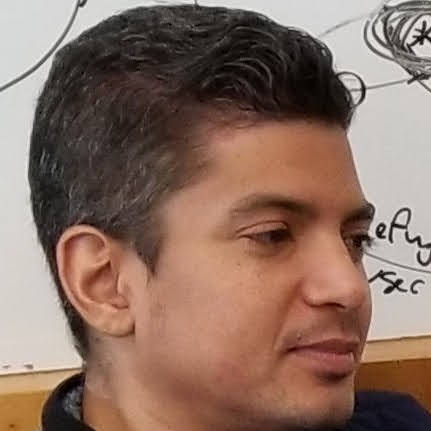 |
Derek Haqq interests include social computing, notifications and awareness, augmented and virtual reality |
|
 |
Taha Hassan interests include machine learning, education, notifications and awareness |
||
 |
Morva Saaty interests include notifications and awareness, community gaming |
||
 |
Jixiang Fan interests include CS education, mobile software design |
||
 |
Yusheng Cao interests include machine learning, tech on the trail |
||
 |
Wei-Lu Wang interests include interpersonal interactions, supporting families with technology, tech on the trail |
||
 |
Natalie Andrus interests include interpersonal interactions, supporting families with technology |
||
| PhD Alumni | |||
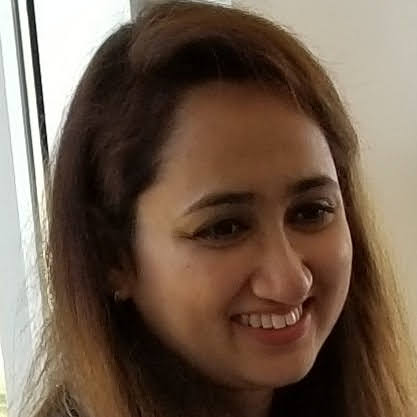 |
Neelma Bhatti, Assistant Professor, Habib University Dissertation: Technology and International Student Parenting: Implications for Research and Design of Digital Childcare Technologies Date of defense: 2022-08-02 |
||
 |
Lindah Kotut, Assistant Professor, University of Washington Dissertation: Amplifying the Griot: Technology for Preserving, Retelling, and Supporting Underrepresented Stories Date of defense: 2021-05-24 |
||
 |
Shuo Niu, Assistant Professor, Clark University Dissertation: Investigating Awareness-Supporting Techniques in Co-located Sensemaking Date of defense: 2019-08-07 |
||
 |
Andrey Esakia, Collegiate Assistant Professor, Virginia Tech Dissertation: Smartwatch Centered System for Facilitating Group Processes of Small Teams in a Statewide Health Promotion System Date of defense: 2018-08-16 |
||
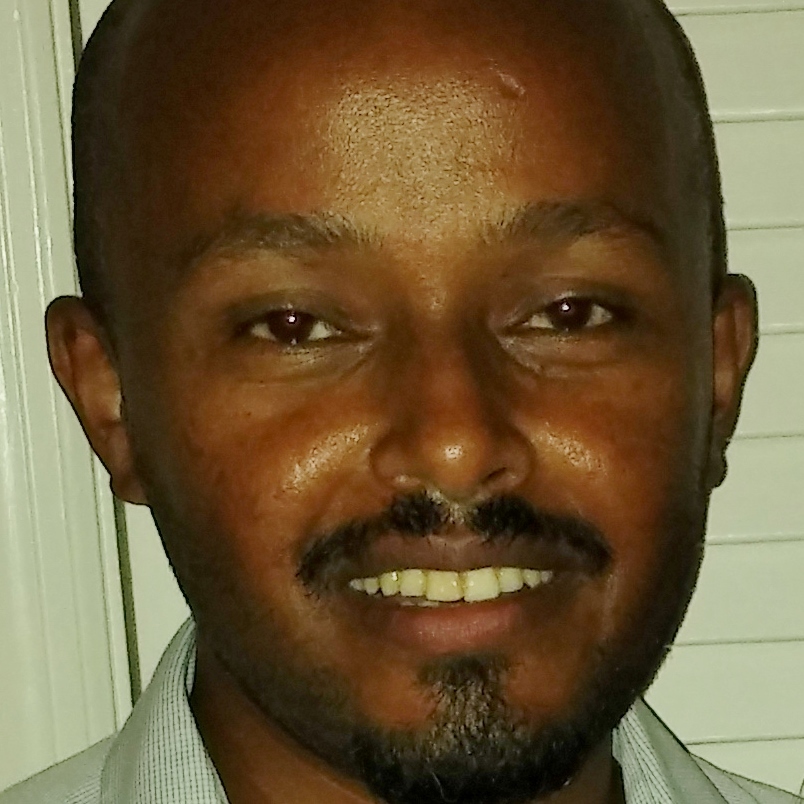 |
Elefelious Getachew Belay, Research Scientist, University of Milan Dissertation: From Making Claims to Establishing Patterns: Understanding Interface Design in Ethiopia (co-advised with Rahel Bekele, Addis Ababa University) Date of defense: 2017-08-29 |
||
 |
Mohammed Seyam, Collegiate Assistant Professor, Virginia Tech Dissertation: Multifaceted Approach for Teaching Mobile Software Development: Class Experiences With Lectures, Tutorials, and Pair Programming Date of defense: 2017-04-03 |
||
 |
Jeremy Barksdale, User Experience Research Manager, Microsoft Dissertation: Social Integration in Agile User Experience: Building Social Capital in Agile User Experience Software Teams Date of defense: 2013-07-12 |
||
 |
Shahtab Wahid, Senior Interaction Designer, Bloomberg Dissertation: Facilitating Design Knowledge Reuse Through Relationships Date of defense: 2011-01-27 |
||
 |
Jason Lee, Associate Creative Director, Sapient (previously Blue Water, Precise Target, Meridium) Dissertation: Integrating scenario-based usability engineering and agile software development Date of defense: 2010-03-31 |
||
 |
Christa Chewar, Academy Professor, United States Military Academy (West Point) Dissertation: User-Centered Critical Parameters for Design Specification, Evaluation, and Reuse: Modeling Goals and Effects of Notification Systems Date of defense: 2005-07-15 |
||
 |
Jacob Somervell, Professor, University of Virginia Wise Dissertation: Developing Heuristic Evaluation Methods for Large Screen Information Exhibits Based on Critical Parameters Date of defense: 2004-06-22 |
||
| MS Alumni | |||
 |
Jaitun Patel, Washington State University Thesis: Supporting Digital Conservation through Mediated Communication on the Appalachian Trail Date of defense: 2023-09-14 |
||
 |
Navyaram Kondur, ADP Thesis: Using K-Mode Clustering to Identify Personas for Technology on the Trail Date of defense: 2018-04-19 |
||
 |
Monika Monk, Omni Federal (formerly at Accenture) Thesis: Mobile exergaming heuristics Date of defense: 2014-10-20 |
||
 |
Gregory Wilson, GEMS World Academy (formerly University of Georgia) Thesis: Experiences with the mobile interactive learning table: A custom table for education Date of defense: 2011-12-08 |
||
 |
Miten Sampat, CRED (formerly Neustar, Quova) Thesis: Enabling Locative Experiences Date of defense: 2007-12-04 |
||
 |
Khaled Hussein, Betterleap (formerly Tilt/Crowdtilt) Thesis: Towards the development of user interface design guidelines for large shared displays Date of defense: 2007-06-05 |
||
 |
Cyril Montabert, Independent Consultant (formerly Merrill Lynch, Deloitte, IBM) Thesis: Supporting Requirements Reuse in a User-centric Design Framework through Task Modeling and Critical Parameters Date of defense: 2006-05-16 |
||
 |
Alain Fabian, SWIFT Thesis: Creating an Interactive Learning Environment with Reusable HCI Knowledge Date of defense: 2006-05-25 |
||
 |
Jamie Smith, Sandia National Laboratory Thesis: Supporting Collaborative Design through Risk Analysis: Benefits of Calculated Risk in the Design of Interactive Systems Date of defense: 2005-05-17 |
||
 |
Brandon Berry, Raytheon (formerly GDAIS) Thesis: VaDeR: Visualizing a Development Record -- A Study of Claims-Centric Scenario-Based Design Date of defense: 2004-06-21 |
||
 |
Christian Allgood, Twitter (formerly at ESPN, Disney, MITRE) Thesis: The Claims Library Capability Maturity Model: Evaluating a Claims Library Date of defense: 2004-06-11 |
||
 |
Chuck Holbrook, StreetDeck (formerly at Lockheed Martin) Thesis: Input Methods for Notification Systems: A design analysis technique with a focus on input for dual-task situations Date of defense: 2003-06-13 |
||
 |
Ali Ndiwalana, Instructor, Makerere University Thesis: Ubiquitous Computing: By the People, For the People Date of defense: 2003-06-19 |
||
| Undergraduates | |||
Spring 2018: Daniel Kavanaugh, Tiffany Wang Fall 2017: Daniel Kavanaugh, Tiffany Wang, Ray Blandford (Microsoft) Spring 2017: Julia Nguyen, Scott Shumway (Voyant) Fall 2016: Puyush Goel, Scott Shumway (Voyant) Spring 2016: Sushant Bhattarai, Wenfeng Ren, Usman Anwar, Kavin Aravind, Jayanth Prathipati (MS at CMU) Fall 2015: Usman Anwar, Kavin Aravind, Sophia Nguyen Stuart McDonald, Steven Chung, Alex Marshall, Jayanth Prathipati, Wenfeng Ren Summer 2015: Evan Spillane (ESPN, MS at Georgia Tech) Spring 2015: Jayanth Prathipati (MS at CMU), Kyle He, Ching Chen, Gabriella Jacobsen, Sonika Singh (Deutsche Bank), T'Keyaha "TK" Sawyers (Google) Fall 2014: Jayanth Prathipati (MS at CMU), Mark Tedesco, Sonika Singh (Deutsche Bank), Gabriella Jacobsen Summer 2014: Sonika Singh (Deutsche Bank), Sea On Lee, Kyle He, Ching Chen Spring 2014: Ryan Merkel, Andrew Weckstein, Jayanth Prathipati Fall 2013: Michael Barnes, Andrew Weckstein, Ivy Jeong Spring 2013: Adil Kadir (Tinder, AOL, Booz Allen Hamilton), Aaron Gringer, Asya Martirosyan, Hovhannes Avagyan Fall 2012: Adil Kadir (Tinder, AOL, Booz Allen Hamilton), Brandon Dockery (IBM) Summer 2012: Adil Kadir (Tinder, AOL, Booz Allen Hamilton), Brandon Dockery (IBM) Spring 2012: Adil Kadir (Tinder, AOL, Booz Allen Hamilton), Brandon Dockery (IBM) Fall 2011: George Zhang (Microsoft) Summer 2011: Clarence Edmonds, Antonio Moore, Darryl Clark Spring 2011: George Zhang (Microsoft) Fall 2010: George Zhang (Microsoft), Creighton Bell, Weston Thayer, Michael Chao Summer 2010: Nina Elias (grad school at Michigan), Eric de Araujo (grad school at VT), Jacob George (working at UC Berkeley), Monika Monk (grad school at VT), Desiree Dorsey (Director of Social Work at Parkview Nursing and Rehab), Donovan Hill, Terrance Pugh, Jasmine Blunt Spring 2010: Kristin Whetstone (IBM), DeMarcus Townsend (CGI Federal), Jacob George (working at UC Berkeley), Keith Manville (grad school at GMU) Fall 2009: Kristin Whetstone (IBM), DeMarcus Townsend (CGI Federal), Keith Manville (grad school at GMU), Jacob George (working at UC Berkeley) Summer 2009: Lulu Hu (Harvard), Joe DeGol, Jennifer Francois (MS at VT), Sherley Codio (MS at VT), Bernadel "Ben" Benoit (grad school at CMU), Mario Eliezer (MS at VT), Erik Irvin-Williams (grad school at CMU), Tavon Gatling, Roosevelt Cooper, Arthur Billingsley, Feclica Osborne Spring 2009: Andrew Forsman, Jacob George (working at UC Berkeley), Luis Rivera, Beth Timmons (NASA), Kristen Whetstone (IBM), Mark Everett, Stephen Probus (PhD program at TAMU) Fall 2008: Luis Rivera, Beth Timmons (NASA), Kristin Whetstone (IBM), Andrew Zimmer (Modea) Summer 2008: Lauren Cairco^ (Clemson Ph.D., Google), Ashley Hagmaier^ (MS at ODU) Spring 2008: Andrew Zimmer (Modea), Will Humphries (MS at VT) Fall 2007: Doguhan Uluca (Meridium), Greg Smith (Moog) Summer 2007: Greg Wilson^ (MS at VT, PhD at UGA, NSF GRF recipient), Karen DelDuca^ (AmerisourceBergen), Tim Watson^ Spring 2007: Doguhan Uluca (Meridium), Greg Smith (Moog), Andrew Zimmer (Modea), Stacy Branham (VT Ph.D., UMBC faculty) Fall 2006: Scott Kelly (UVa law school student) Summer 2006: Ryan Engle^ (CEO and Co-Founder of R3D Mobile, previously at Rengler, i-Grasshopper, Super Happy Fun Fun, VT), Brian Weston, Lee Clagett Spring 2006: Ben Hood (High Performance Technologies Inc), Scott Kelly (UVa law school student), Sarav Bhatia (Meridium), Spencer Rinehart (Dominion Enterprises) Fall 2005: Miten Sampat (VT MS, Feeva, Quova)^, Anupam Kumar, Sarav Bhatia (Meridium), Ivan Brown (CDC), Chris Cerwinski (Northrup Grummon), Curtis Dahn (VT grad school), Brian Sciacchitano (VT MS student), Sandeer Nair, Adib Kadir^ (Microsoft) Summer 2005: Edwin Bachetti^ (NIST), Saurabh Bhatia (Microsoft) Spring 2005: Edwin Bachetti^ (NIST), Andrew Jackson^ (Cornell, Affinity Lab), Ben Congleton^ (Michigan Ph.D. student), Mat Davis, Kai Tang (MS at CMU), Saurabh Bhatia (Microsoft), Patrick Liesveld (grad school at VT), Joe Stegner, Sam Edwards (Harmonia), Miten Sampat (VT MS, Feeva, Quova), Akshai Prakash (Deliotte, CGI-AMS), Anupam Kumar Fall 2004: Edwin Bachetti^ (NIST), Justin Belcher (VT MS student), Andrew Jackson^ (Cornell staff), Ben Congleton^ (Michigan Ph.D. student), Matt Jablonski^ (BAE Systems), Vinay Lakhani (Capgemini, Public Consulting Group), Manveer Heir, Harish Hoon (General Electric) Summer 2004: Edwin Bachetti^ (NIST), Andrew Jackson^ (Cornell staff), Justin Belcher^ (VT MS student) Spring 2004: Edwin Bachetti^ (NIST), John Booker (VT MS student), Laurian Hobby (VT PhD student), Missy [Grant] Bishop (Crutchfield), Kevin Pious, Alan Fabian (VT MS student), Nima Rashidi (Lockheed Martin), David Felton, Andy Tarpley (Harris Corporation), Theresa Klunk (Moog), Matt Jablonski (BAE Systems), Doug Hall, Shahzad Hussain, Ben Congleton (Michigan Ph.D. student), Raheel Aidrus (CACI, UT Dallas grad school) Fall 2003: Edwin Bachetti^ (NIST), John Booker (VT MS student), Tyler Newton, Laurian Hobby (VT PhD student), Travis Pendergraft, Missy [Grant] Bishop (Crutchfield), Cyril Montabert (IBM, VT MS student), Kevin Pious, Alain Fabian (VT MS student), Nima Rashidi (Lockheed Martin), David Felton, Andy Tarpley (Harris Corporation), Nicholas Taylor Summer 2003: Edwin Bachetti^ (NIST), John Booker (VT MS student), Sibel Kucukoner^ (grad school at U Kentucky), Tyler Newton, Edgardo Vega (Moog) 2002-2003: David Wrighton (Microsoft), Dillon Bussert (Booz Allen Hamilton), William Leubke (VTC, UNC MS graduate), Mike Richmond^, Brandon Berry (GDAIS, VT MS grad), Max Moldenhauer (IBM RTP), John Booker (VT MS student), Chris Henry (SunTrust), Chad Guebert (US Navy, MBA at Penn State), Shahtab Wahid (VT PhD student), Doug Turnbull (Northrup Grumman/Sperry Marine), Amit Ghulawe (Microsoft, UT Austin graduate), Steve Battjer (Lockheed Martin), Vinay Lakhani (Capgemini, Public Consulting Group), BJ Poole, Clif Gaus, Aditi Jain (Penn MS student), Bilal Aziz (IBM), Jatin Ahuja (ebusinessware), Josh Kim, Matt Whiteman, Jason Shank (VT MS student), Yazid Boukerroui, Evan Yeager, Janeisha Fields 2001-2002: David Wrighton (Microsoft), Dillon Bussert (Booz Allen Hamilton), Brandon Berry (GDAIS, VT MS grad), William Leubke (VTC, UNC MS graduate), Mike Richmond^, Mike Shore^, Chris Henry (SunTrust), Shahtab Wahid (VT PhD student), Doug Turnbull (Northrup Grumman/Sperry Marine), Chad Guebert (US Navy, MBA at Penn State), Amit Ghulawe (Microsoft, UT Austin graduate) 2000-2001: David Wrighton (Microsoft), Dillon Bussert (Booz Allen Hamilton), Mike Richmond, Jeff Osterberg |
|||
| Committees | |||
PhD Breno Dantas Cruz Promoting Systematic Practices for Designing and Developing Edge Computing Applications via Middleware Abstractions and Performance Estimation https://vtechworks.lib.vt.edu/handle/10919/103010 Date of defense: 2021-04-09 Michael Clark Stewart CoListen 2018-09-19 Javier Alejandro Tibau Benitez Exploring and Promoting Family Connections at a Distance Through FamilySong 2020-02-03 Noha Ibrahim Mohamed Elshrbiny Applying Curricular Alignment to Improve the Effectiveness of CS Education 2020-07-13 Brennon Bortz Using Music and Emotion to Enable Effective Affective Computing 2019-07-02 Brady Redfearn Rapid Design and Prototyping Methods for Mobile Head-Worn Mixed Reality (MR) Interface and Interaction Systems https://vtechworks.lib.vt.edu/handle/10919/82056 Date of defense: 2018-02-09 Yao Wang Exploring the Role of Prospective Memory in Location-Based Reminders https://vtechworks.lib.vt.edu/handle/10919/77583 Date of defense: 2017-05-03 Mohammed Fawzi Seddik Farghally Visualizing Algorithm Analysis Topics https://vtechworks.lib.vt.edu/handle/10919/73539 Date of defense: 2016-11-30 Ashley Robinson The Attitudes of African American Middle School Girls Toward Computer Science: Influences of Home, School, and Technology Use https://vtechworks.lib.vt.edu/handle/10919/52277 Date of defense: 2015-05-13 Leigh Lally A Formative Evaluation of Personal Learning Networks for Professional Development in the Architecture + Design Industry https://vtechworks.lib.vt.edu/handle/10919/47931 Date of defense: 2014-05-08 Joon Suk Lee Micro-Coordination: Looking into the details of face-to-face coordination https://vtechworks.lib.vt.edu/handle/10919/51119 Date of defense: 2013-06-17 Kacie Allen (Blackman) Developing and Testing Smartphone Game Applications for Physical Activity Promotion in Adolescents https://vtechworks.lib.vt.edu/handle/10919/22050 Date of defense: 2013-05-14 Laurian Vega Security in Practice: Examining the Collaborative Management of Sensitive Information in Childcare Centers and Physicians' Offices https://vtechworks.lib.vt.edu/handle/10919/37552 Date of defense: 2011-03-28 Tao Ni A Framework of Freehand Gesture Interaction: Techniques, Guidelines, and Applications http://scholar.lib.vt.edu/theses/available/etd-09212011-230923/ Date of defense: 2011-09-19 Regis Kopper Understanding and Improving Distal Pointing Interaction http://scholar.lib.vt.edu/theses/available/etd-07012011-195812/ Date of defense: 2011-06-09 Riham Mansour Formal Analysis and Design for Engineering Security (FADES) http://scholar.lib.vt.edu/theses/available/etd-03232009-182707/ Date of defense: 2009-03-11 Kyou Woong Kim Exploiting Cyclostationarity for Radio Environmental Awareness in Cognitive Radios http://scholar.lib.vt.edu/theses/available/etd-06022008-173056/ Date of defense: 2008-05-08 Nicholas Fearing Polys Display Techniques in Information-Rich Virtual Environments http://scholar.lib.vt.edu/theses/available/etd-06152006-024611/ Date of defense: 2006-06-02 Mir Farooq Ali A Transformation-based Approach to Building Multi-Platform User Interfaces Using a Task Model and the User Interface Markup Language http://scholar.lib.vt.edu/theses/available/etd-05172005-041721/ Date of defense: 2004-11-16 MS Sarah Grace Fields Technology on the Trail: Using Cultural Probes to Understand Hikers https://vtechworks.lib.vt.edu/handle/10919/78726 Date of defense: 2017-08-21 Andrey Esakia Development and Exploratory Findings of a Smartwatch Interface to Facilitate Group Cohesion in a Statewide Health Promotion Program https://vtechworks.lib.vt.edu/handle/10919/78889 Date of defense: 2017-05-25 Shiwani Dewal Effects of Feedback Video in Mediated Communication https://vtechworks.lib.vt.edu/handle/10919/73170 Date of defense: 2016-10-04 William Thomas Information Scraps in the Smartphone Era https://vtechworks.lib.vt.edu/handle/10919/81135 Date of defense: 2016-06-19 Kristen Hines Exploration of Alerting Methods on Vest-Worn Systems https://vtechworks.lib.vt.edu/handle/10919/78104 Date of defense: 2016-05-04 Priyanka Mohan Student perceptions of various hint features while solving coding exercises https://vtechworks.lib.vt.edu/handle/10919/64777 Date of defense: 2016-02-03 Sherriff Jolaso TaskAmbient: A Study in Personal Task Management Visualization https://vtechworks.lib.vt.edu/handle/10919/52782 Date of defense: 2015-05-28 Michael Stewart How Private is Private?: Effects of Degree of Information Sharing on Group Ideation https://vtechworks.lib.vt.edu/handle/10919/23238 Date of defense: 2013-06-17 Vineeta Chaube Understanding and Designing for Perceptions of Trust in Rideshare Programs http://scholar.lib.vt.edu/theses/available/etd-08122010-015313/ Date of defense: 2010-07-30 Justin Belcher Embodied Interfaces for Interactive Percussion Instruction http://scholar.lib.vt.edu/theses/available/etd-05312007-113346/ Date of defense: 2007-05-10 Brian Badillo Migrating Three Dimensional Interaction Techniques http://scholar.lib.vt.edu/theses/available/etd-05072007-141647/ Date of defense: 2007-04-23 Sujatha Krishnamoorthy Designing Interactive Visualizations for First-time Novice Users http://scholar.lib.vt.edu/theses/available/etd-12082005-000350/ Date of defense: 2005-11-09 David S. Myers An Extensible Component-Based Architecture for Web-Based Simulation Using Standards-Based Web Browsers http://scholar.lib.vt.edu/theses/available/etd-09072004-120912/ Date of Defense: 2004-06-14 Christopher Stephen Williams WS://IM: A Software Framework for Multimodal Web Interaction Management http://scholar.lib.vt.edu/theses/available/etd-05122004-172908/ Date of Defense: 2004-05-03 Catherine Payne Organizational Decision-Making in Information Technology Choice: A Case Study and Investigative Approach http://scholar.lib.vt.edu/theses/available/etd-05052004-150335/ Date of Defense: 2004-04-23 Ahmed Samy Sidky RGML: A Specification Language that Supports the Characterization of Requirements Generation Processes http://scholar.lib.vt.edu/theses/available/etd-07292003-112122/ Date of Defense: 2003-07-25 John A. Costigan Applying Information Visualization Techniques to Visual Debugging http://scholar.lib.vt.edu/theses/available/etd-06182003-021954/ Date of Defense: 2003-04-24 Narayanan Gopalakrishnan Kodiyalam Remote Usability Evaluation Tool http://scholar.lib.vt.edu/theses/available/etd-05292003-180633/ Date of Defense: 2003-05-19 Vikrant Colaso A Usability Problem Inspection Tool: Development and Formative Evaluation http://scholar.lib.vt.edu/theses/available/etd-05232003-143928/ Date of Defense: 2003-04-18 Sanjini Jayaraman PolarEyez: A Radial Focus+Context Visualization for Multidimensional Functions http://scholar.lib.vt.edu/theses/available/etd-01242003-153310/ Date of Defense: 2003-01-06 Purvi Saraiya Effective Features of Algorithm Visualizations http://scholar.lib.vt.edu/theses/available/etd-08202002-132927/ Date of Defense: 2002-07-12 |
|||